










Safeguarding Most Important Wealth - Intellectual Property
Richard Caron, CIO & VP of Business Process Management, Isola Group and CIO & VP of Business Process Management, Isola Group
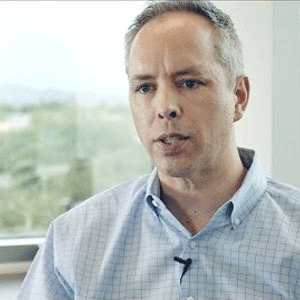
Richard Caron, CIO & VP of Business Process Management, Isola Group
The key to success is to fully understand SAP’s portfolio of offerings and to aggressively push across the enterprise, the business improvements that SAP offers. Companies need to make their ERP/ SAP system the centerpiece of transformation. Many companies spend too much time integrating a hodgepodge of systems—some of which may be unavoidable, but this is wasted energy. IT needs to continually work with the business leaders to identify the projects that create the most value for the company. When new business needs arise, we always consider the SAP offerings as our default provider. For example, we decided to toss out a legacy Business Intelligence system and standardize on SAP’s Business Warehouse/ Business Objects.
"The biggest risk to outsourcing an ERP implementation is the expectation that the partner will “own” the implementation"
This decision minimized the integration challenges and provided confidence to the integrity of the data. Another example would be our move to SAP’s GRC tool (Governance, Risk, and Compliance), which was a clear choice to ensure our Sarbanes- Oxley efforts are aligned with our backend systems. More recently, we have engaged with SAP’s Success Factors, their cloud-based HRIS offering. We see a number of
Granted, not all of SAP’s offerings will be the best fit for every business need, and finding the right solutions may include alternate vendors or custom solutions. One example of an innovative solution at Isola is our global scheduling system. Although this is a custom solution uniquely designed for our business processes, it’s built into SAP and adds value by precisely scheduling our manufacturing workloads, so that we can meet our customers’ demands for quick turnaround of orders while minimizing the inventory levels that are required to provide excellent customer service.
I feel that IT is best positioned to provide innovative ideas since we have one foot in the business and one foot in the technical world. Yes, business innovation can and should come from the IT department. We should provide more value than simply “keeping the lights on.” Rather, IT can lead innovation across the organization. These best ideas originate through an evolving joint process of discovery and experimentation with the business.
Outsourcing an ERP implementation to a partner may offer value by providing new perspectives and best practices. However, the biggest risk to such an implementation is the expectation that the partner will “own” the implementation. Rollouts need to be driven by key employees that reside in IT and across the business, not the vendor. Too many companies expect the vendor to take ownership and that is a risky proposition.
Knowledge of your business is the key to success. The resources that are critical to a successful implementation, the resources needed to provide employees with thorough training—are best performed by individuals who intimately understand the business.
For our SAP rollout across the Americas, we utilized SAP as our implementation partner; however, to ensure company ownership, SAP assisted in only the first factory rollout, and subsequently a team of employees completed the four remaining factory implementations. There is no substitute for in-house business expertise.
See This: Energy Tech Review
